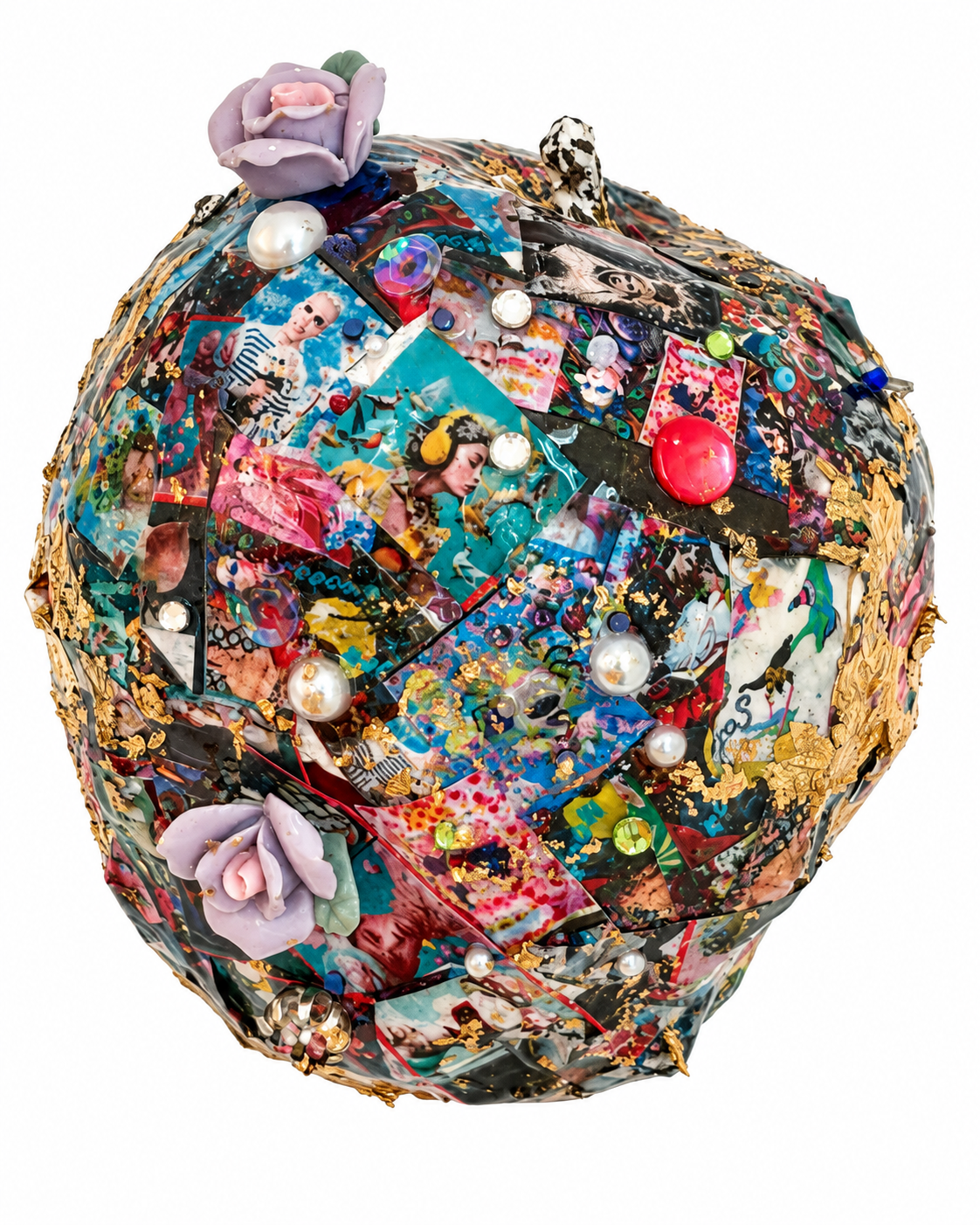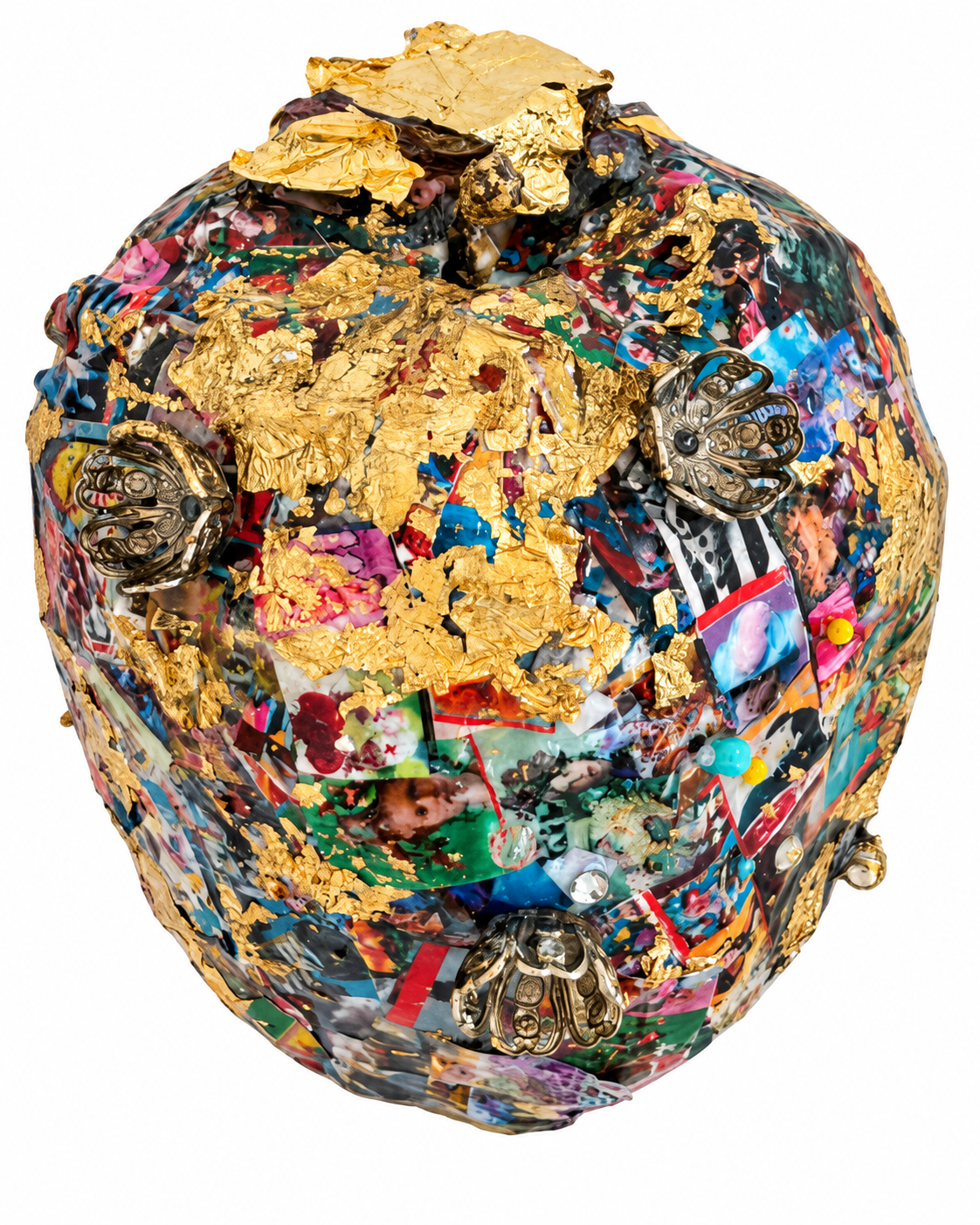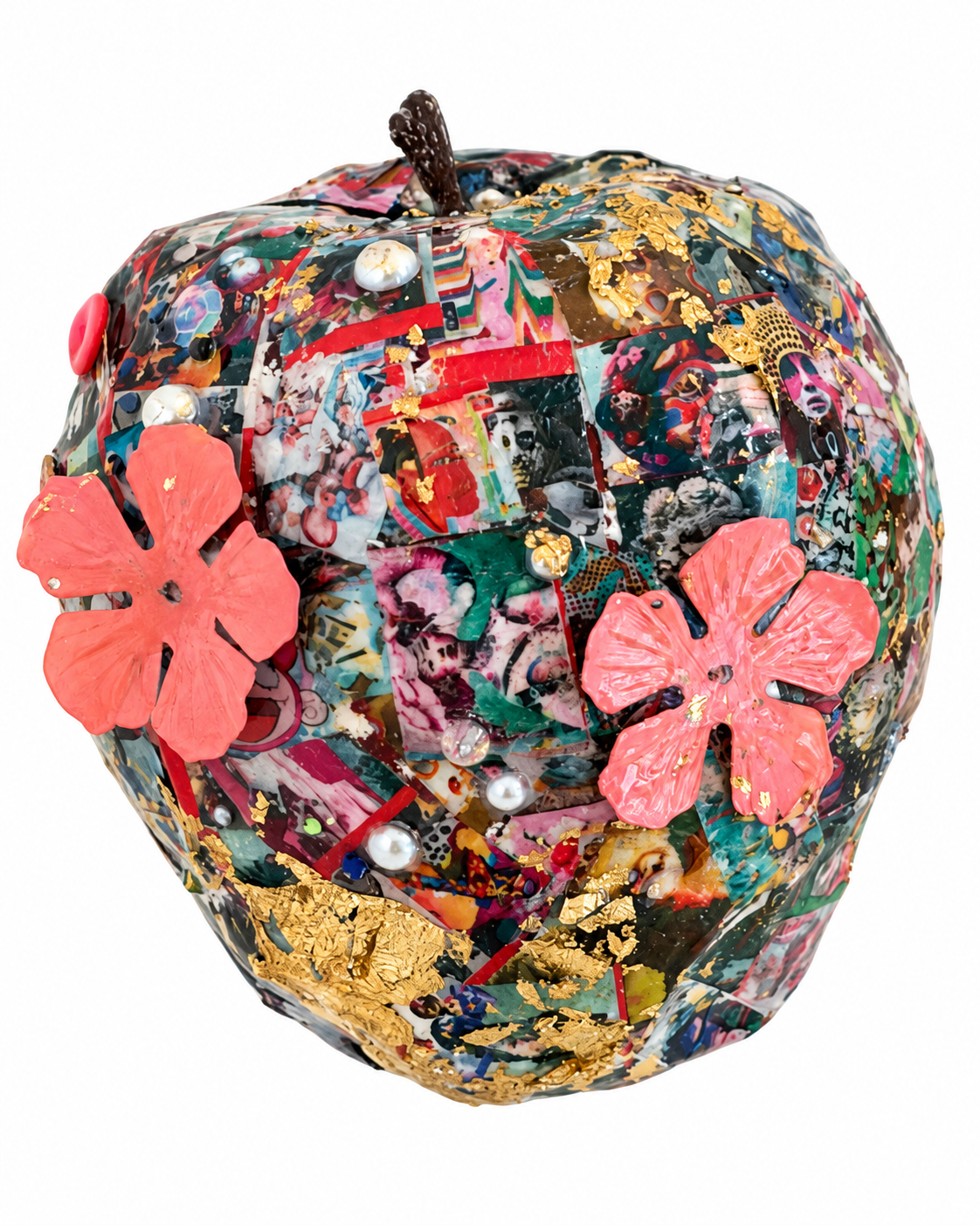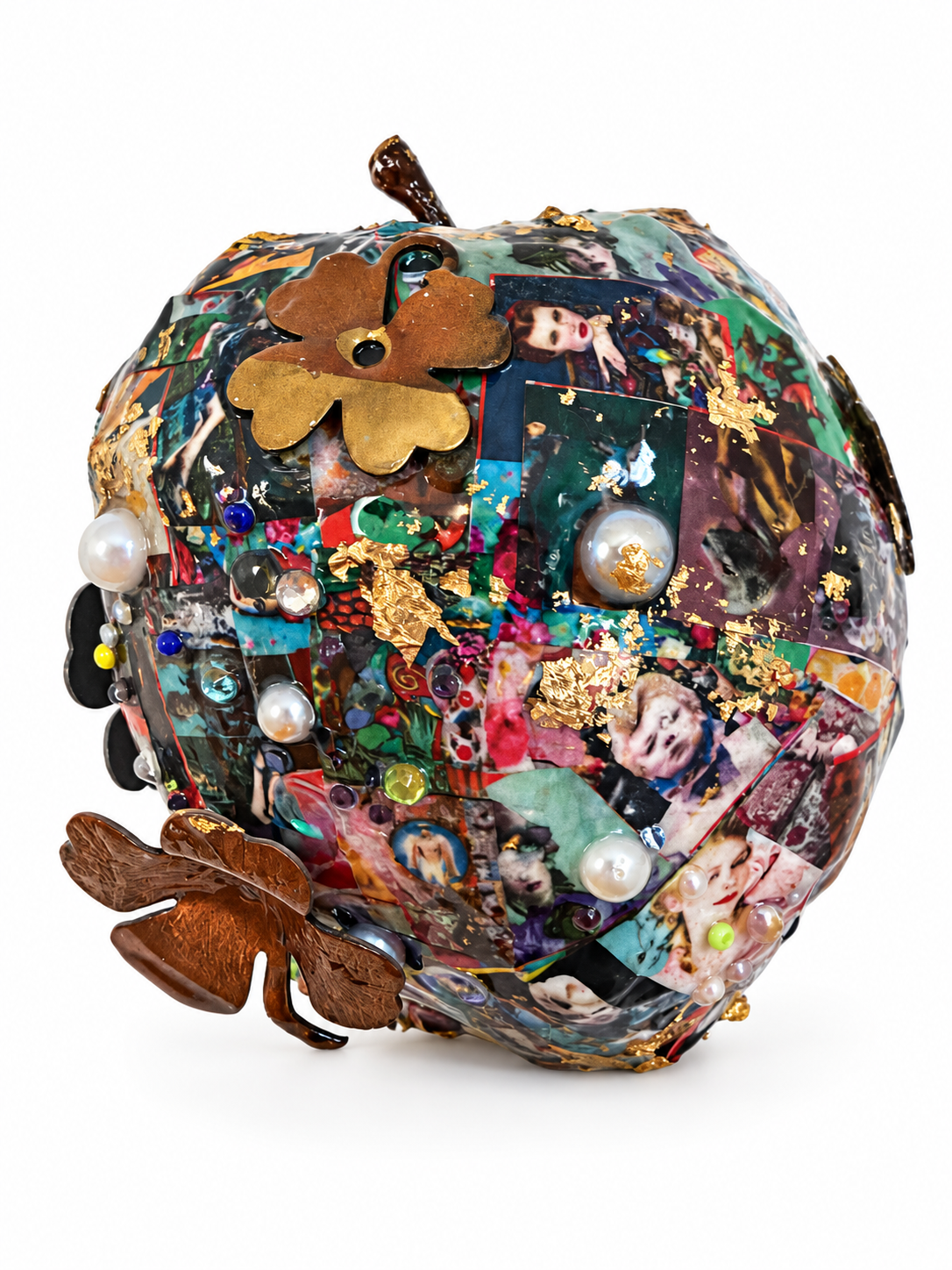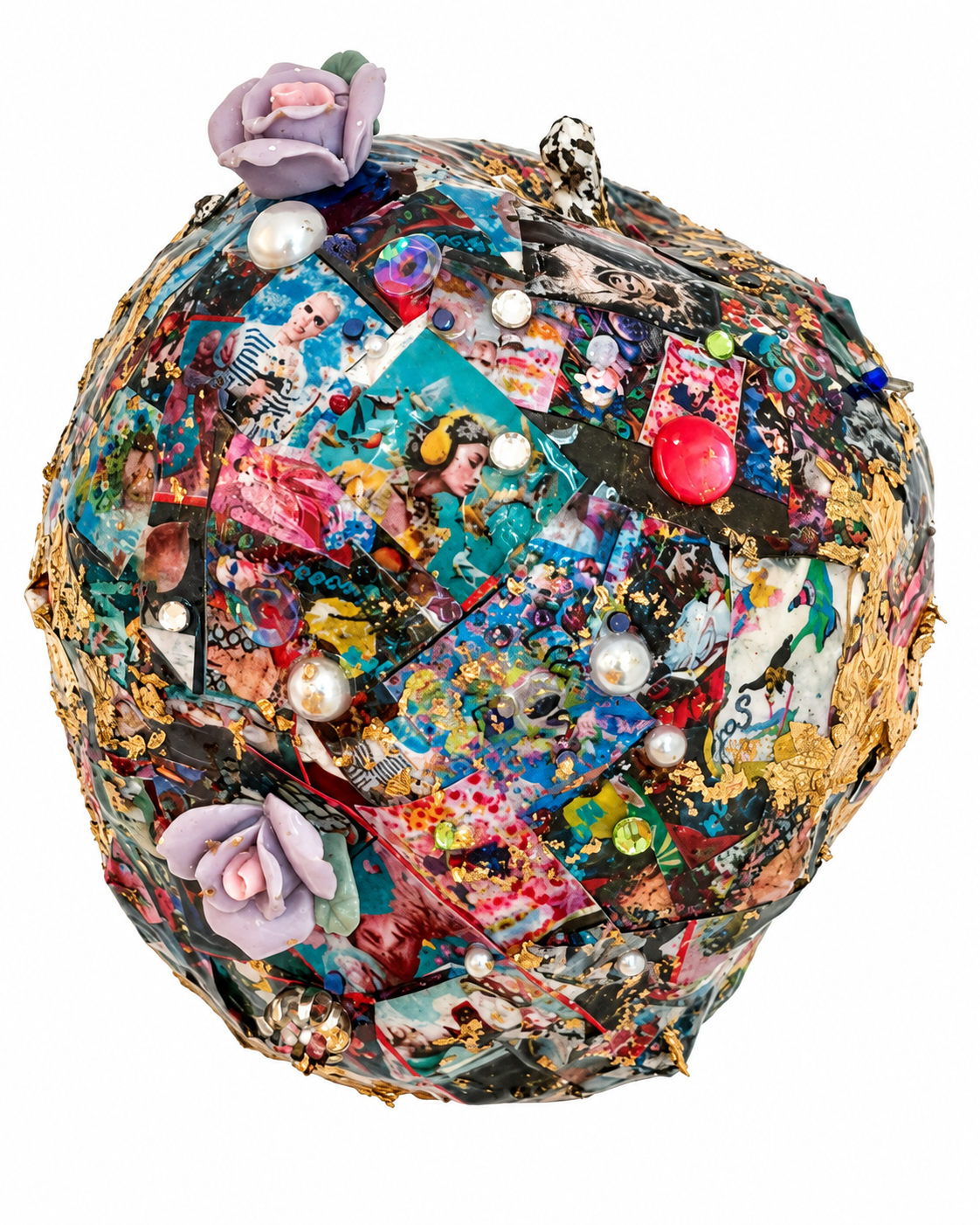
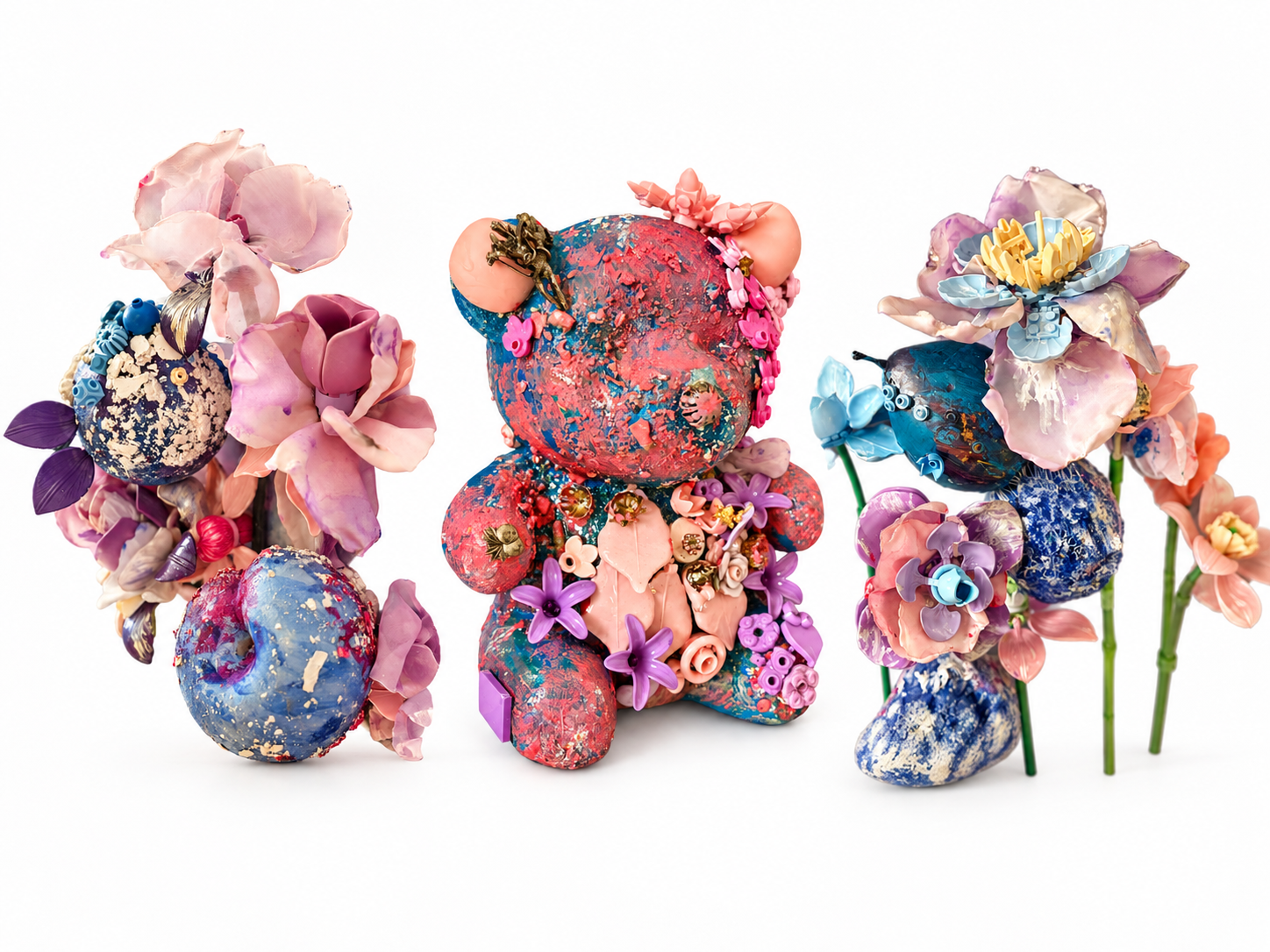
The exhibition considers the uneasy coexistence of the ephemeral and the enduring: organic matter destined to decompose alongside synthetic materials engineered to outlast generations.
Through the juxtaposition of foraged botanicals, salvaged jewelry, discarded medical components, textiles, plaster, gold leaf, and industrially produced ornamentation, Forever Garden constructs an imagined ecology in which the distinctions between natural and artificial, precious and disposable, preservation and destruction become increasingly unstable.
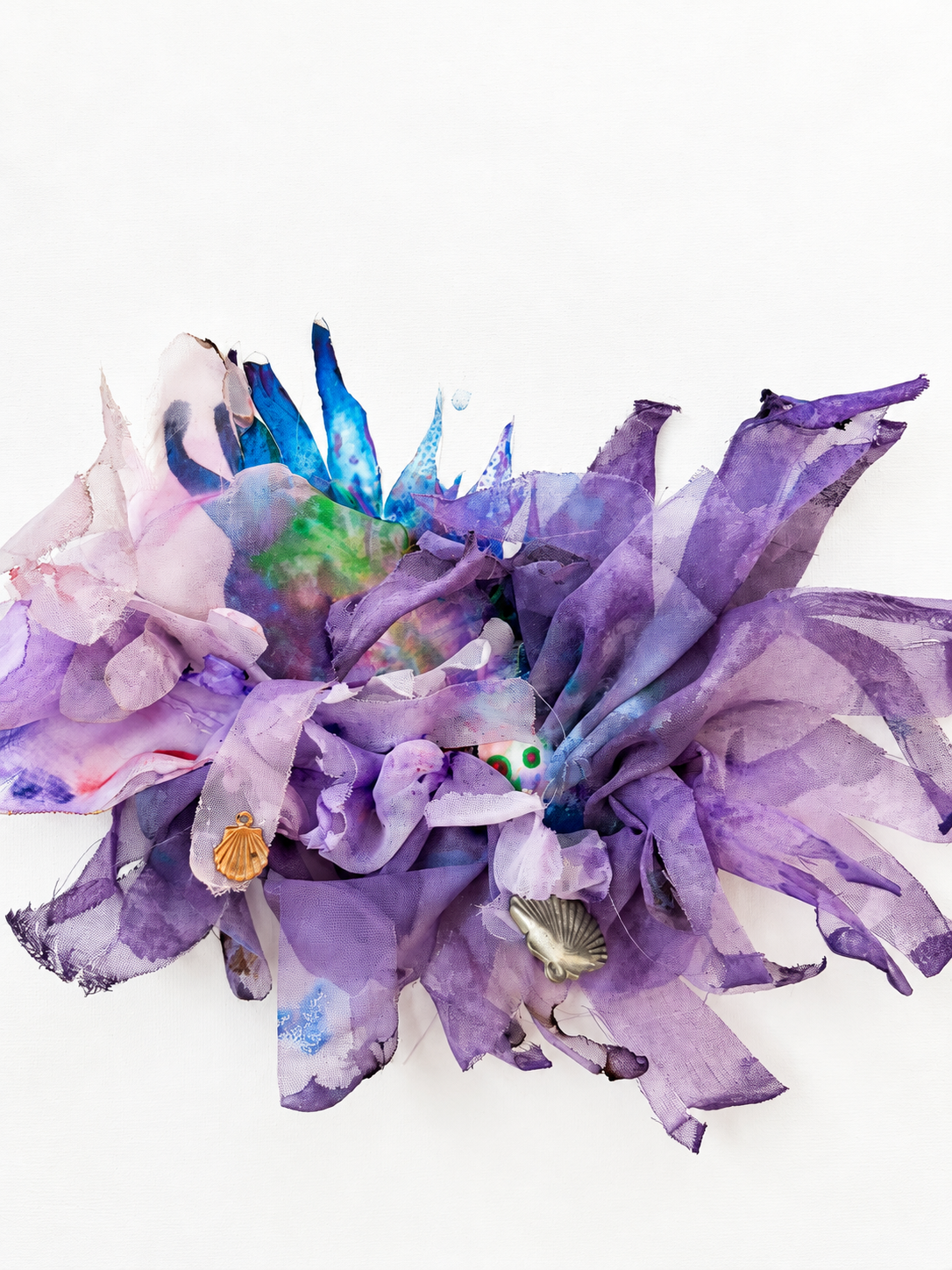
sea anemone
The garden, historically conceived as a site of cultivation, sanctuary, and controlled nature, becomes here a metaphor for humanity's contradictory relationship with the environment. We seek to possess beauty, arrest its decline, and reproduce its forms, even as the processes of production and consumption accelerate the disappearance of the very ecosystems we admire.
Forever Garden inhabits this contradiction. Its subjects—flowers, birds, corals, fruit, and human figures—appear exuberant, ornamental, and at times fantastical. Yet beneath their decorative surfaces lies a more unsettling proposition: that the permanence we pursue may itself be a form of ecological violence.
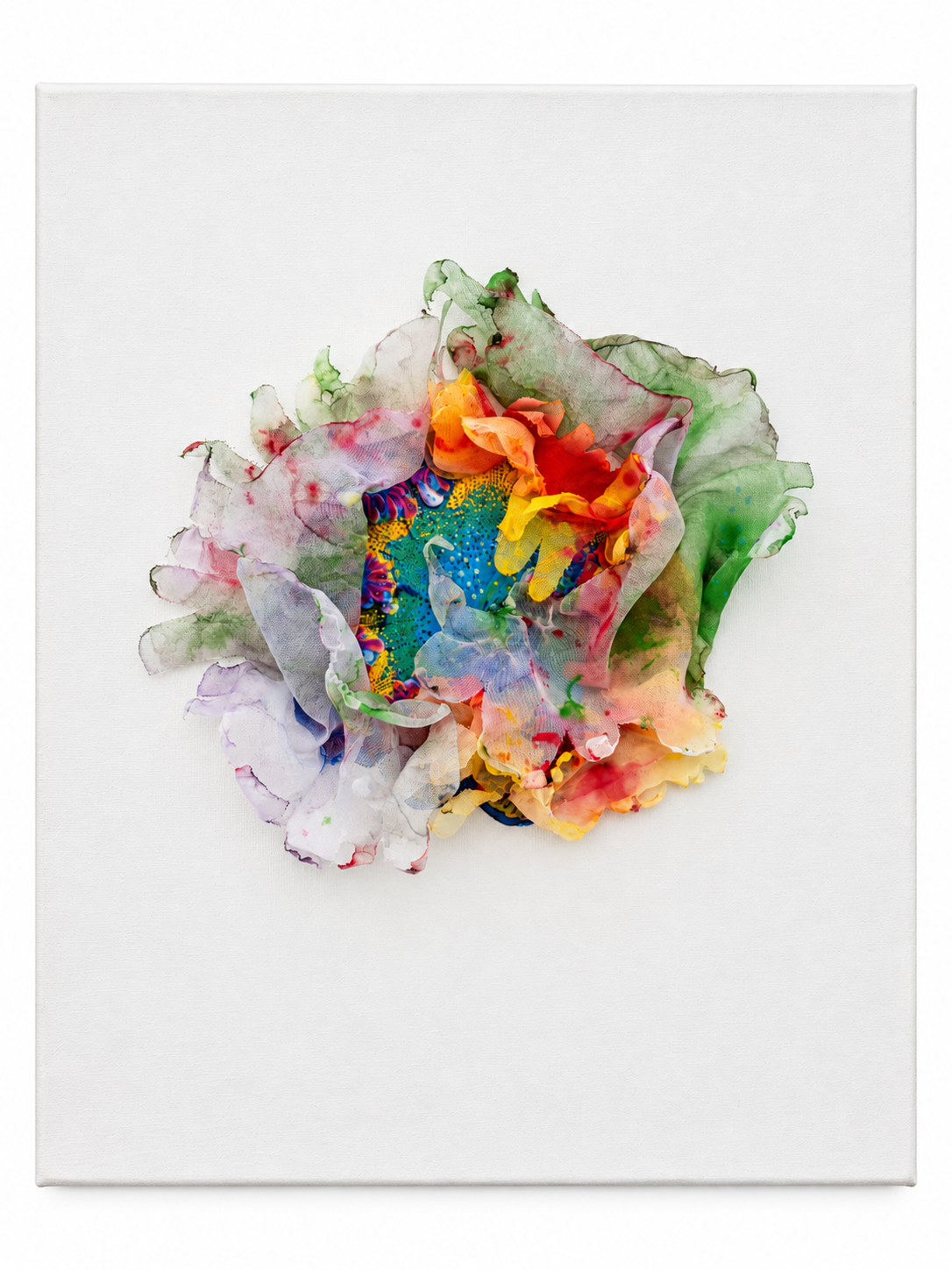
brain coral
Material as Memory, Ornament as Intervention
Rather than treating found materials as passive substitutes for conventional artistic media, the exhibition approaches them as objects carrying histories of extraction, manufacture, consumption, use, and abandonment.
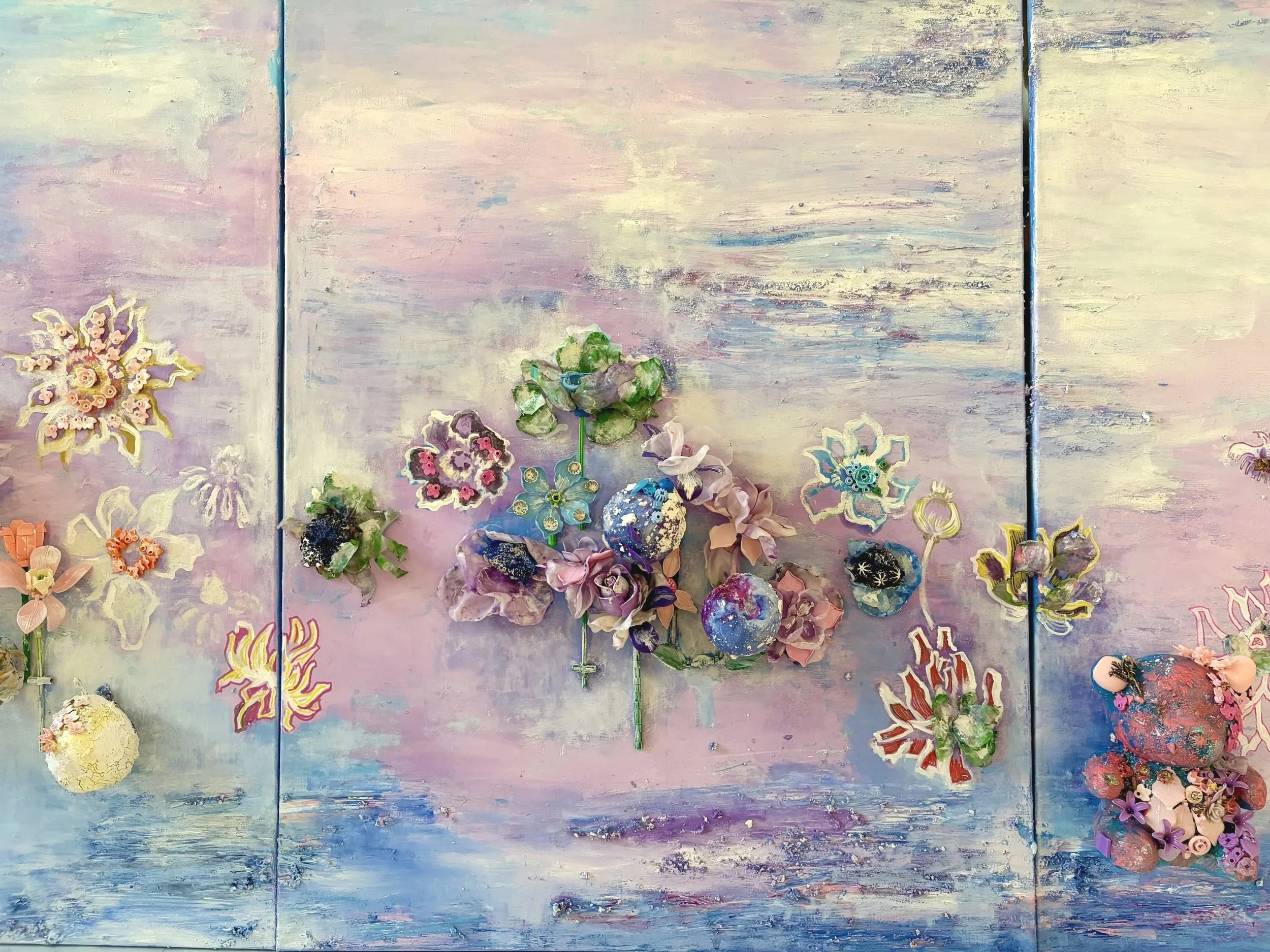
A fallen leaf bears evidence of seasonal transformation. A piece of discarded jewelry retains the traces of human adornment and desire. A medical apparatus embodies the technological mediation of the body. Plastic botanical elements, meanwhile, suggest a perfected nature that neither grows nor dies.
Their incorporation into art does not erase these histories. Instead, it allows seemingly unrelated systems—ecological, industrial, domestic, and biological—to coexist within a single visual field.
In this context, embellishment becomes more than an aesthetic gesture. Gold leaf, beads, lace, and imitation gemstones evoke traditional associations with luxury, permanence, and cultural value, while their placement alongside waste and organic debris unsettles conventional hierarchies between the precious and the discarded.
The works ask whether value resides in a material's provenance, its durability, its beauty, or the capacity of artistic intervention to transform our perception of it.
Constructing an Artificial Ecology
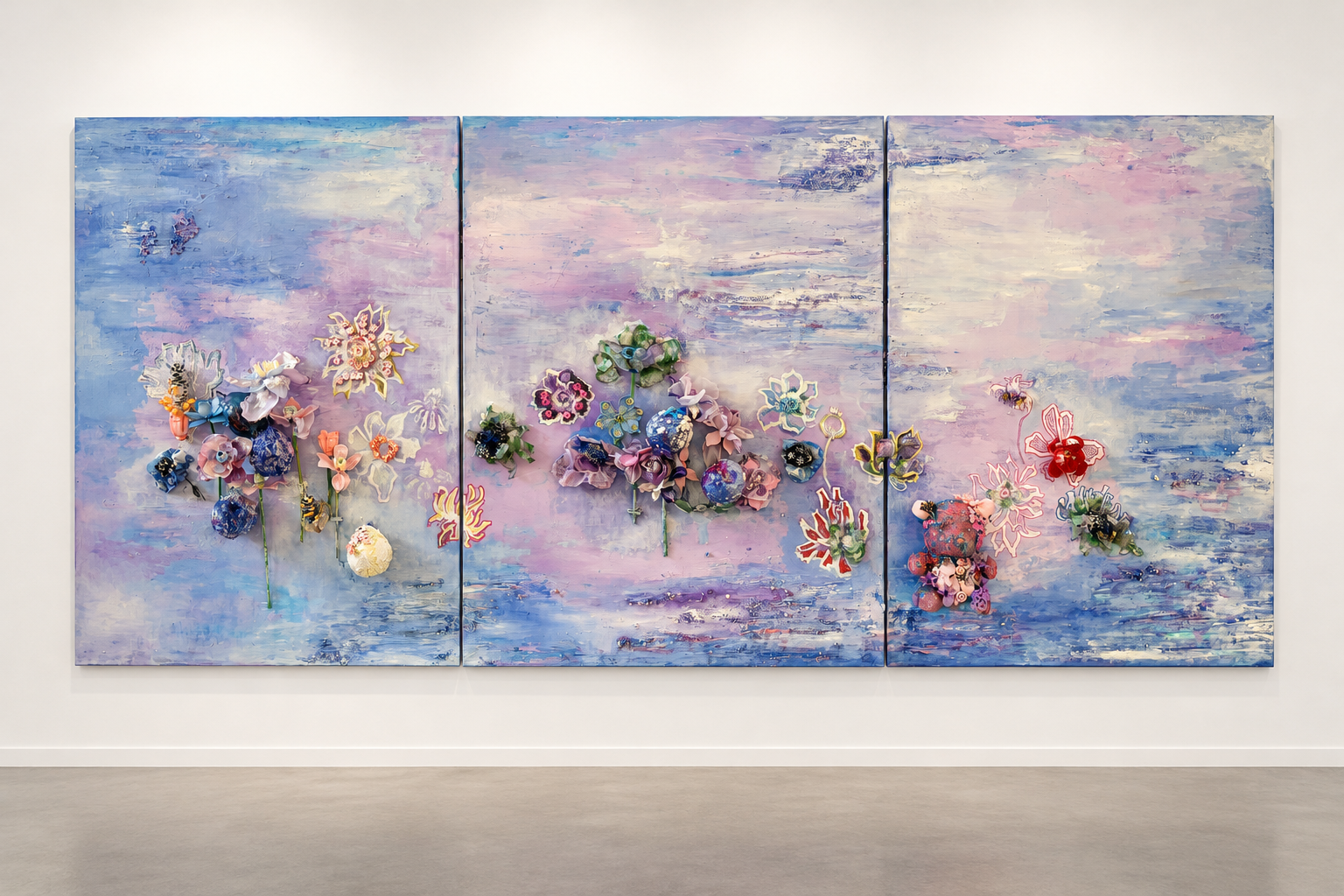
The exhibition's central floral compositions, collectively titled Forever Garden, assemble dried flowers, textile petals, and LEGO botanical elements into luxuriant environments suspended between growth and fabrication.
The flowers occupy different temporal conditions: some are already entering decay, while others exist outside biological time altogether.
This tension invokes the historical tradition of vanitas, in which flowers, fruit, and other objects served as reminders of mortality and the transience of earthly pleasures. Yet these contemporary compositions complicate that tradition. Where the wilting flower once symbolized the inevitability of death, the synthetic flower introduces a different anxiety: the prospect of an object that survives long after its ecological referent has disappeared.
The work thus raises a question not simply of mortality, but of what survives, and at whose expense.
state symbols: celebrating Rhode Island
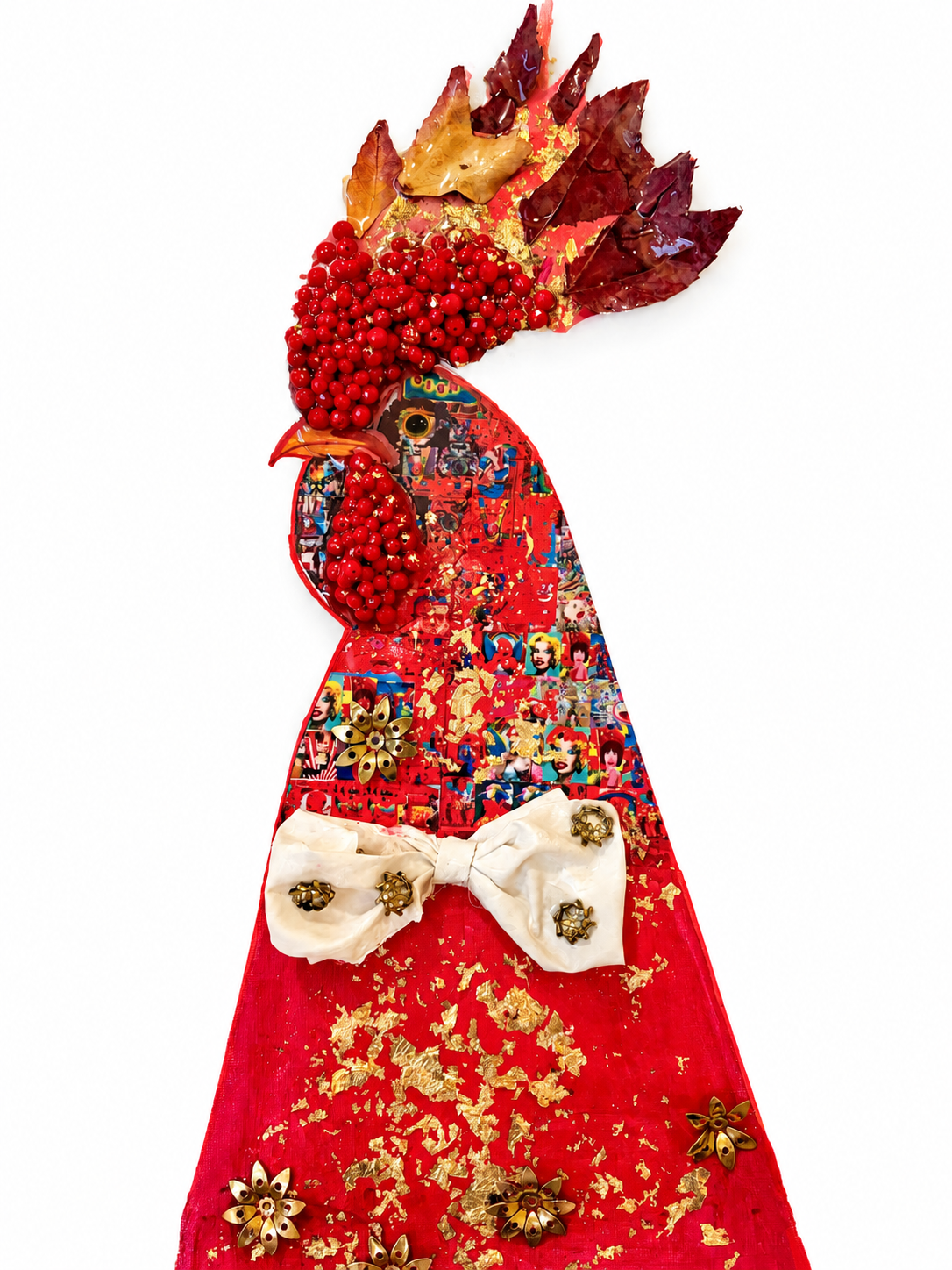
the Rhode Island Red
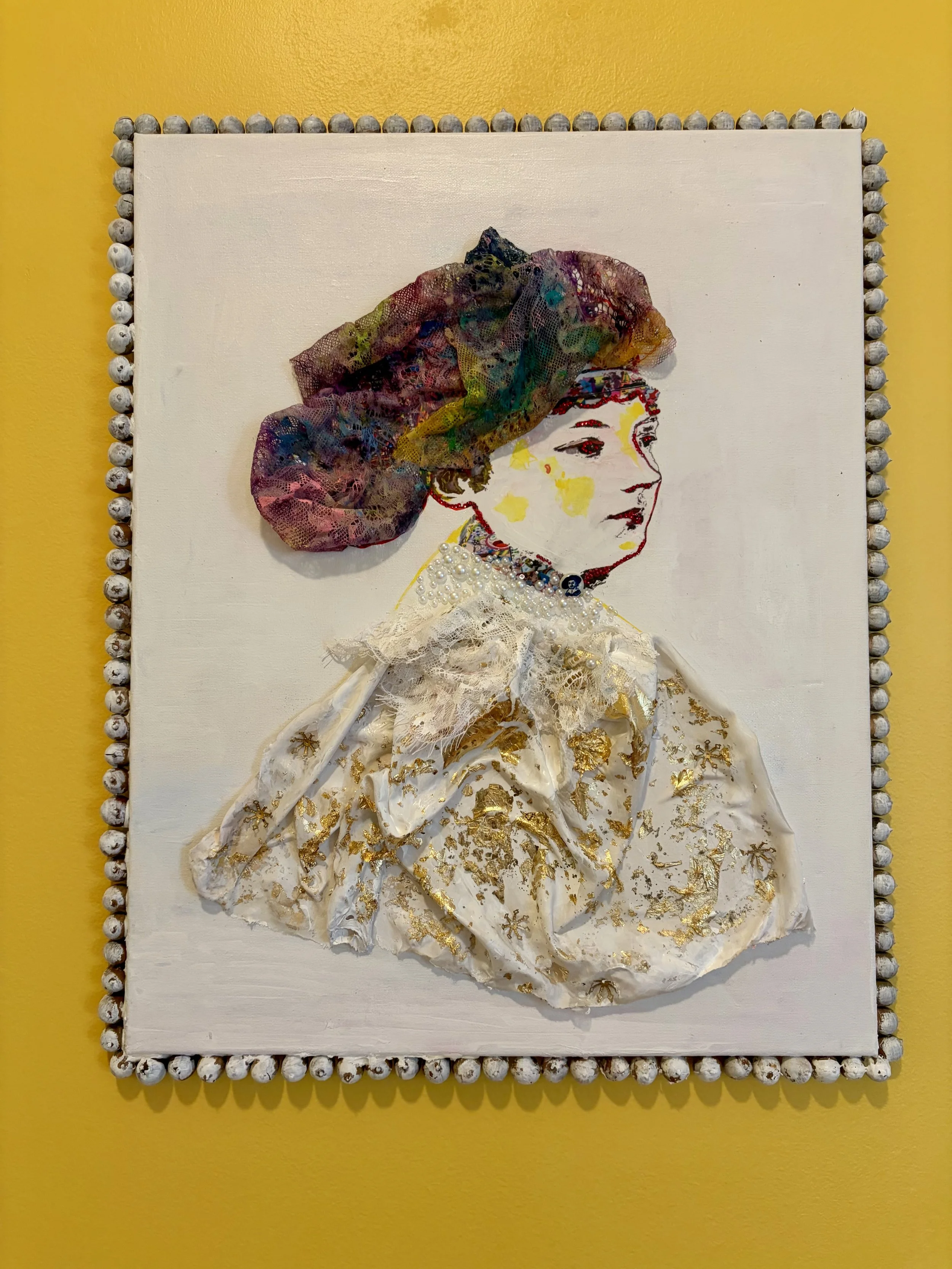
homage to an original painting by Rosa Peckham, one of the Providence Art Club’s 16 founders
Rhode Island Red — A Celebration of Place and Identity
Inspired by the Rhode Island Red, the state's iconic chicken breed and official state bird, this mixed-media painting pays tribute to Rhode Island's agricultural heritage through an unexpected interplay of natural and manufactured materials. I created the rooster's distinctive cockscomb using maple leaves foraged near my Providence studio, preserving their organic forms while transforming them into an elaborate crown. Gold leaf and salvaged jewelry embellishments sourced from Providence's Wolf E. Myrow lend the bird an almost regal presence, elevating a familiar farmyard subject into an ornamental icon.
Created during my residency at Angell Street Galleries, the work celebrates local identity while exploring a central theme of Forever Garden: how discarded objects and fleeting elements of nature can acquire new meaning, beauty, and permanence through artistic transformation.
Homage to Rosa Peckham's Breton Headdress
This mixed-media portrait pays homage to Rosa F. Peckham, one of the 16 founding members of the Providence Art Club, and her 1880 painting Breton Headdress. Reinterpreting the original through a contemporary lens, I embellished the figure with colored glass, delicate lace, and faux pearls, introducing layers of texture and ornamentation that bridge traditional portraiture and modern assemblage. The work is framed with acorns foraged from the surrounding Providence neighborhood, connecting the city's artistic heritage with its natural landscape. Created during my residency at Angell Street Galleries, the piece is both a tribute to Peckham's legacy and a reflection on how art, memory, and materials can be reimagined across generations.
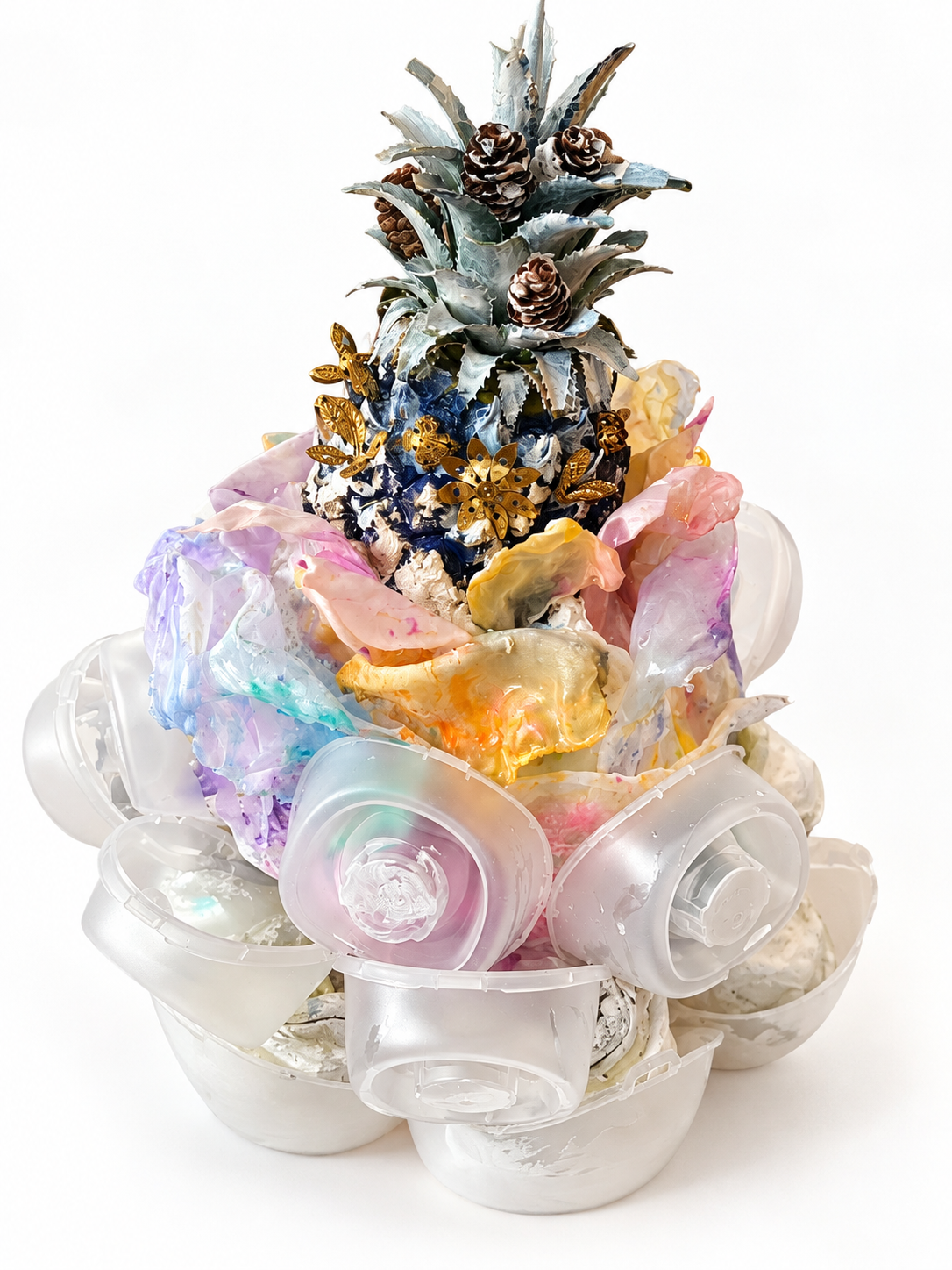
Like La Pigna itself, the sculpture invites viewers to question how an object's identity is shaped by its appearance, cultural associations and the stories we attach to it.
Work in progress: A pineapple reimagined from pine cones, plaster of Paris, discarded nebulizer components, salvaged jewelry, and gold leaf. Part of Forever Garden, Angell Street Galleries, Providence, 2026.
The Pineapple and the Pine Cone: An Afterlife of Objects
One of the more playful sculptures emerging from my residency takes inspiration from La Pigna, the iconic sculpture suspended beneath the Federal Hill archway in Providence. For decades, the landmark has inspired a distinctly Rhode Island debate: is it a pineapple or a pine cone? Although La Pigna translates from Italian as “pine cone,” a traditional symbol of abundance and hospitality, its resemblance to a pineapple continues to divide opinion. The sculpture's recent restoration and gilded appearance have brought renewed attention to this much-loved local curiosity.
Rather than settle the debate, I decided to embrace it.
My interpretation combines a pineapple with pine cones, enveloped in a shell of discarded nebulizer components, plaster of Paris and translucent, sculpted forms. The nebulizer parts, originally designed to assist breathing, are arranged like overlapping scales or petals, suggesting both the protective exterior of a pine cone and the textured skin of a pineapple. The result is a hybrid botanical form whose identity becomes increasingly ambiguous upon closer inspection.
The sculpture is further embellished with gold leaf and salvaged jewelry components sourced from Providence's Wolf E. Myrow, lending an almost ceremonial quality to materials that have otherwise lost their practical or commercial value. There is a deliberate irony in transforming discarded medical equipment into an ornamental object associated with abundance and welcome.
About the Artist:
Gary Low | Artist Biography
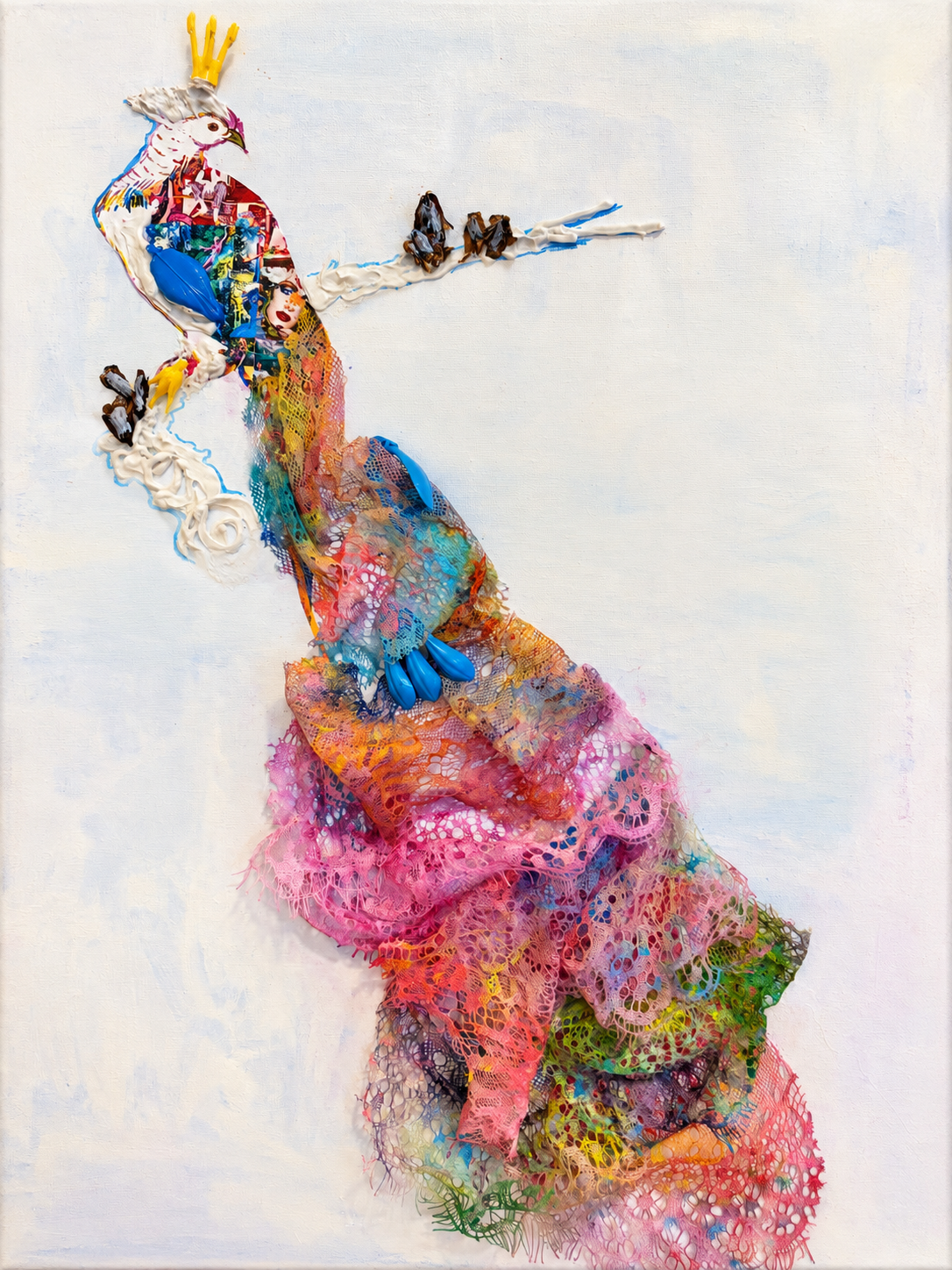
Gary Low is a Malaysian-born, New York-based contemporary mixed-media artist whose practice explores the intersection of nature, material transformation, and the impermanence of beauty. Descended from generations of Malaysian Chinese floriculturists, with family roots in orchid cultivation and chrysanthemum farming, Low draws upon his botanical heritage to examine humanity's complex relationship with the natural world. His richly textured paintings and sculptural assemblages combine foraged organic materials, salvaged jewelry, textiles, gold leaf, and discarded manufactured objects, challenging conventional distinctions between the precious and the disposable, the natural and the artificial. His work embraces ornamentation and visual abundance while confronting deeper questions of ecological fragility, consumption, memory, and renewal.
His recent collection, Forever Garden, developed during his 2026 artist residency at Angell Street Galleries in Providence, Rhode Island, reflects these themes through an exploration of organic decay and manufactured permanence. Low's works have attracted collectors internationally, including in Dubai, Cyprus, and Singapore, and his deer sculpture (“Der Hirsch”) was recognized among Saatchi Art's Best Sculptures of 2025.
Website: garylowdesigns.com | Instagram: @garylowdesigns | Available Works: Saatchi Art